
Soft gateway & middleware
PsShubGive each point a clear identity
Align supplier definitions, source point names and property meanings so upper systems know where each point comes from and what it represents.
DEVICE / POINT / PROPERTY
Connect devices. Identify their data.
Device-link standards
Organize connections for protocol families including OPC, Modbus, BACnet and SNMP. Check versions and read/write scope against the equipment documentation.
Point namespaces
Retain location, device and property context to distinguish matching names from different sources.
Dynamic data structures
Accommodate supplier definitions and retain source meanings to establish a clear basis for point binding.
Product demonstration · Point identities and definitions
One point name can refer to different objects
Compare two naming situations to see how device identity, properties and units inform the decision.
Both say TEMP. They measure different temperatures.
Binding by the source name alone can confuse supply-air and boiler outlet-water temperatures. Keep device identity and property meaning so the upper system can distinguish them.
Air-handling unit 01
AHU-01- Source name
TEMP- Meaning
- Supply-air temperature
- Source unit
- °C
- Protocol to verify
- Modbus
building-a.ahu-01.supply_temp Boiler 01
BLR-01- Source name
TEMP- Meaning
- Outlet-water temperature
- Source unit
- °C
- Protocol to verify
- BACnet
plant-b.blr-01.outlet_temp Interpret TEMP with its device and property: supply-air temperature for AHU-01, outlet-water temperature for BLR-01.
Different names can describe supply-air temperature.
Supplier A uses SA_T; supplier B uses TSupply. Similar meanings do not make them interchangeable: confirm units, scaling and device identity.
Air-handling unit 01
AHU-01- Source name
SA_T- Meaning
- Supply-air temperature
- Source unit
- °C
- Protocol to verify
- Modbus
building-a.ahu-01.supply_temp Air-handling unit 02
AHU-02- Source name
TSupply- Meaning
- Supply-air temperature
- Source unit
- 0.1 °C
- Protocol to verify
- BACnet
building-a.ahu-02.supply_temp SA_T and TSupply describe supply-air temperature on different devices, in °C and 0.1 °C respectively. Check scale, numeric type and permissions before alignment.
What to verify before binding
Check protocol and version, point address or object instance, property definitions, numeric types, unit scale and read/write permissions. Validate protocol candidates and naming correspondence in an authorized environment.
Compare the two naming situations when preparing your equipment point list.
Download point comparison CSVApplication scenarios
Where this helps with integration
Multiple equipment suppliers
When combining point lists, align source definitions, units and identities before discussing bindings to upper systems.
Building-system coordination
Devices, transport and gateways have different roles. Confirm gateway responsibilities before connecting to upper data exchange.
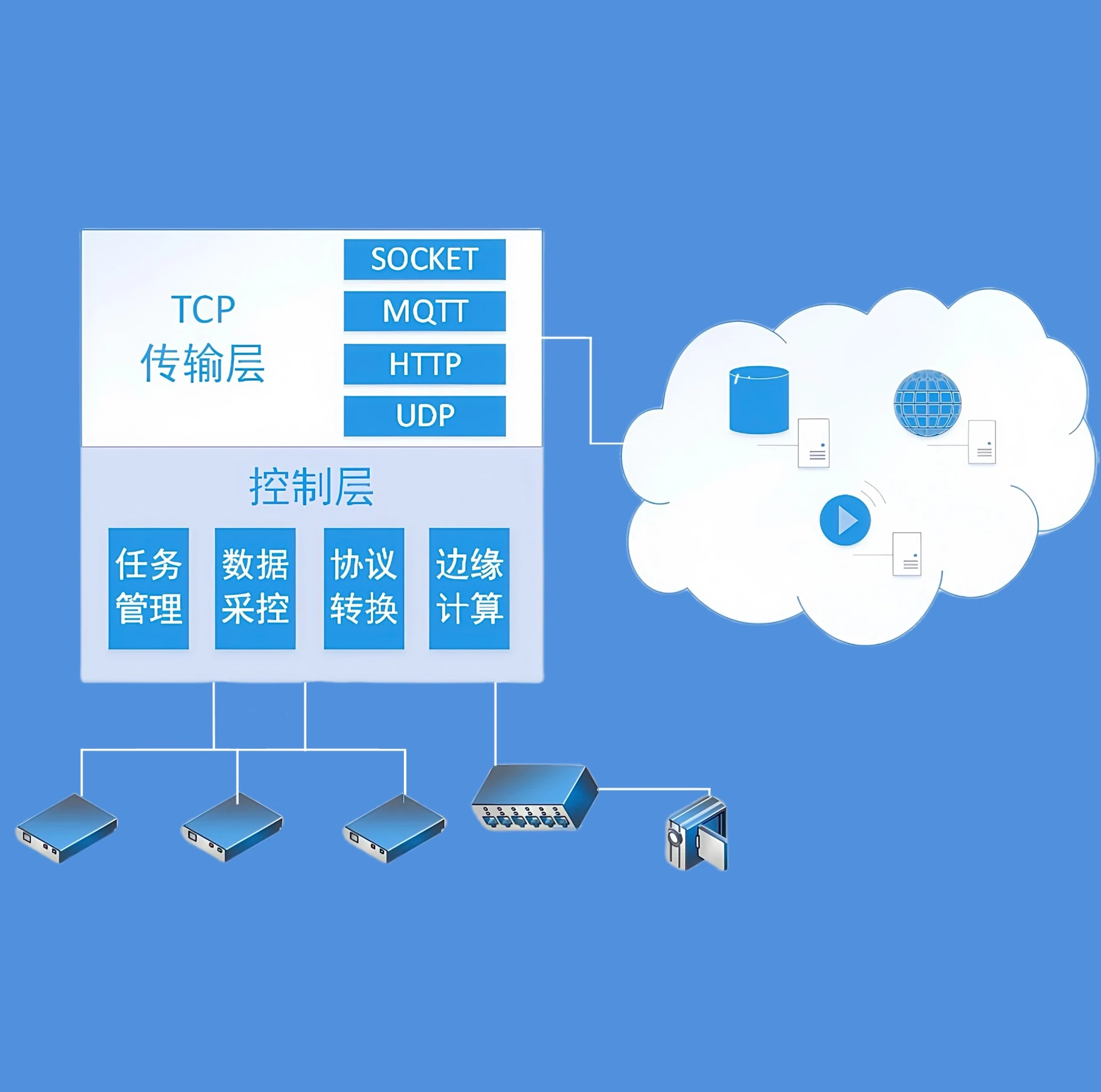
See integration in its device context
The original diagram distinguishes transport, control-layer responsibilities and device connections. Use it to discuss gateway work and handoff, then confirm actual conditions against the equipment documentation.
Open the full originalPsShub
Start with one point and its connection
Share the equipment, point definition, consuming workflow and permissions to agree adaptation and validation scope.